I am excited and honored to announce that I have been awarded a Consolidator Grant of CHF 1.77 million by the Swiss National Science Foundation (SNSF). My five-year research project titled, Building Wildfire Resilient Communities in Europe (FiRES) will be hosted by the Institute of Geography at the University of Bern from 1 August 2023.
Securing this grant has been a long and, at times, grueling journey. But it has also provided me with a welcomed opportunity to reflect on how to consolidate nearly two decades’ worth of fire research, which has taken me from Europe to Africa, Australia and North America before returning me to Europe.
The project
Wildfires pose an urgent yet unsolved social problem in Europe with more people living at-risk than ever before. This is due to a four-decade increase in the frequency, scale, and intensity of catastrophic wildfires in southern, central, and northern Europe alike. The increasing cost and decreasing effectiveness of traditional wildland firefighting tactics due to land use, climate, and other changes have led to a hard won truth: civil protection agencies cannot protect every single home that lie in the path of catastrophic wildfires. Communities therefore need to be prepared to act in an informed manner. This requires a scaling up of social solutions.
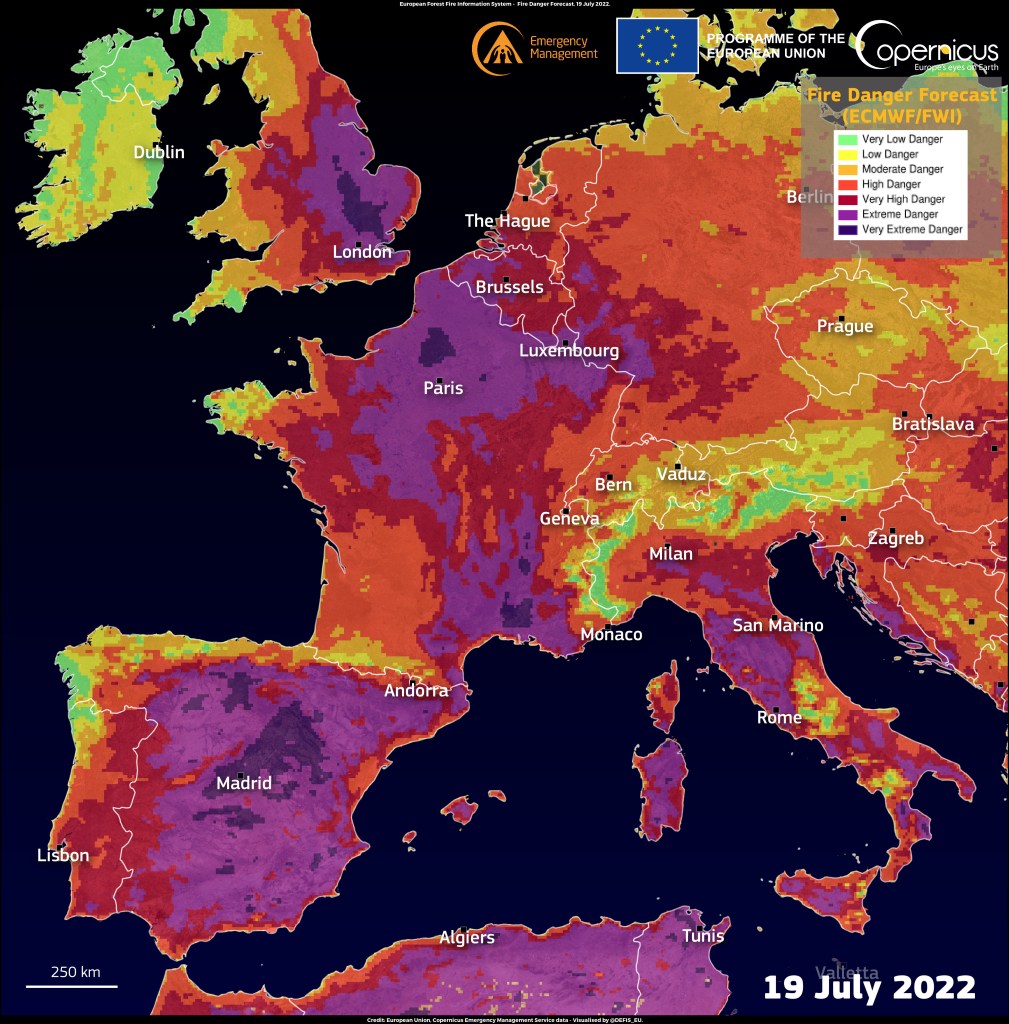
My project – FiRES – focuses on wildfires as a critical example of the type of climate-related hazards that large parts of Europe will face regularly in the coming decades. It asks: what factors enable people to prepare, survive, and recover from catastrophic wildfires? By marrying online surveys, in-depth interviews, narrative analysis, and action research, the project aims to learn from and with wildfire-impacted residents, community champions, and civil protection personnel.
FiRES recognizes that Europe has a unique opportunity to tackle the growing wildfire challenge by empowering communities and civil protection personnel with two-way knowledge and skills now before the threat becomes acute across the continent. It will therefore use a comparative case study design that includes rural and wildland-urban interface sites, ranging from the fire-prone Mediterranean to the growing risk of wildfires in the Alps and northern Europe.
The process
SNSF Consolidator Grants are aimed at mid-career academics who completed their PhD 7-12 years ago – an eligibility criteria I just met at 11 years and 6 months! The grant scheme was launched by the SNSF (on behalf of the federal government) as a transitional measure in 2021, when Switzerland became a non-associated third country in the EU’s Horizon Europe research funding framework. This move meant researchers based in Switzerland became ineligible (hopefully only temporarily!) for the European Research Council’s career grants.
Step 1 of the application process started with a call for submissions in March 2022. It then took me on average ten hours a day, six days a week, for three months straight to develop my project from scratch and write the detailed 52-page written proposal. I owe a debt of gratitude to the Management and my colleagues at the ETH Center for Security Studies for the encouragement and very long leash they gave me during this period.
Step 2 commenced when I was informed five months after submitting my written proposal that I had made the first cut. I then prepared a ten-minute pitch that was delivered to the evaluation panel during an online interview in December. I have shared a recording of my pitch below to aid others who aspire to apply to similar grant schemes.
While I worked incredibly hard to secure this grant, I still consider myself lucky. Of the 180 applications evaluated by the SNSF, 30 were ultimately funded – a success rate of 17%. Mine was one of ten successful projects within the social sciences and humanities.
The people who had my back
I and the proposed project would be much poorer without the support of some fabulous people! To Matthias Leese and Tim Prior who gave stellar advice and asked challenging questions from beginning to end; Chinwe Ifejika Speranza, Carolin Schurr, and Christian Kull who believed in me and my project from the moment I approached them with my ideas; Andrin Hauri and Jan Thiel who put up with a lot, as I imperfectly balanced endless grant-writing hours with other work commitments; Myriam Dunn Cavelty, Enzo Nussio, Gov Clayton, Sophie Fischer, and Lennart Maschmeyer who took my interview pitch to the next level, as they constructively tore the first version apart; and to Katrina Abatis, Alessandra Zaugg, Liviu Horovitz (and his two fellow musketeers), Stephen Herzog, and Marco Martini for reminding me – with the help of coffee, red wine, good food, fresh mountain air, and laughter – that there is more to life than work (even if much of that time is spent vigorously talking about work!) – THANK YOU!
 Dr. Christine Eriksen
Leave a comment