Research Impact


Advisory Roles
Making an impact by facilitating change and empowering others is often effectively done through feedback and direct engagement with people and projects. I do this through peer-review of academic articles, formal and informal mentoring of early career academics, examination of theses, as an assessor of grant applications, and by providing overview and in-depth feedback on expert committees and advisory boards. A few examples include:
Assessor of grant applications
- HORIZON MSCA Postdoctoral Fellowships, European Commission (2025)
- Pacific Institute for Climate Solutions, Canada (2022)
- Swiss National Science Foundation and São Paulo Research Foundation (2021)
- Australian Research Council (2016)
- Swedish Research Council FORMAS (2014, 2019)
Examiner of doctoral and masters theses
- Ursula Rodrigues, University of Western Australia, Australia (2025)
- Tugba Altin, PhD, University of Calgary, Canada (2025)
- Nora Komposch, PhD, University of Bern, Switzerland (2024)
- Kathleen Uyttewaal, PhD, Wageningen University, The Netherlands (2024)
- Guy Jackson, PhD, University of Queensland, Australia (2020)
- Sandra Vaiciulyte, PhD, University of Greenwich, England (2020)
- Samantha Strong, PhD, Charles Sturt University, Australia (2017)
- Debra Parkinson, PhD, Monash University, Australia (2015)
- Tshering O’Gorman, MA, Macquarie University, Australia (2014)
Advisory Board Member and Expert Reviewer for EU Horizon- and DG-ECHO-funded projects (since 2021)
- FIREPRIME – European Program for Wildfire-Prepared Communities
- RiskPACC – Addressing the Risk Perception-Action Gap
- Firelogue – Cross-Sector Dialogue for Wildfire Risk Management
Committee Member for Humanities & Social Sciences Research Ethics, University of Wollongong, Australia (2017–2020).
Expert Committee Member for the Association for Fire Ecology’s White Paper on Gender Discrimination and Sexual Harassment in the Wildland Fire Profession (2015–2016).
Steering Committee Member for Weather the Storm: Women Prepare, a project of the National Rural Women’s Coalition, Australia (2011–2012).
Fellow of the Royal Geographical Society with the Institute of British Geographers (2001–present).
Member of the Association for Fire Ecology (2023-present).
Member of the Institute of Australian Geographers (2007–2020), and Co-founder and Chair of the IAG’s Hazards, Risks and Disasters Study Group (2014–2016).
Council Member of the Geographical Society of New South Wales, Australia (2007–2009).
Impact Case Studies
It is not always easy to track the impact of research projects beyond ongoing partnerships and collaborations, and publication downloads and citation ratings. However, direct feedback from stakeholders, program implementation, and policy changes can provide clear and gratifying examples, such as the following case studies.
Europe’s fiery future: rethinking wildfire policy in Switzerland
Wildfires pose an urgent yet unsolved social problem in Europe. In Switzerland, the annual average temperature has already increased by nearly two degrees Celsius since the pre-industrial era. Without concerted efforts to mitigate greenhouse gas emissions, a further increase is predicted of two to three degrees Celsius by 2060.
Climate change will therefore become an all-encompassing challenge for Switzerland in the coming years, with more drought, heatwaves, water scarcity, extreme precipitation events, and associated natural hazards such as wildfires and landslides, affecting and shaping all layers, sectors, and regions of society.
In 2021, the Swiss Federal Council consequently reviewed current practices of wildfire management in Switzerland. This review drew heavily on two of my recent projects where I first recommended rethinking wildfire policy in Europe, and then, together with colleagues, outlined the impacts of climate change in the Swiss Alps and provided an evaluation of Switzerland becoming a participating state of the EU Civil Protection Mechanism (UCPM).
In a report adopted on 26 January 2022, titled ‘Timely, efficient wildfire prevention and control’, the Swiss Federal Council defined measures for improvement, in particular when wildfires affect several cantons simultaneously. This includes measures to investigate the effects of secondary risks, such as smoke development, and to better understand the wildland-urban interface.
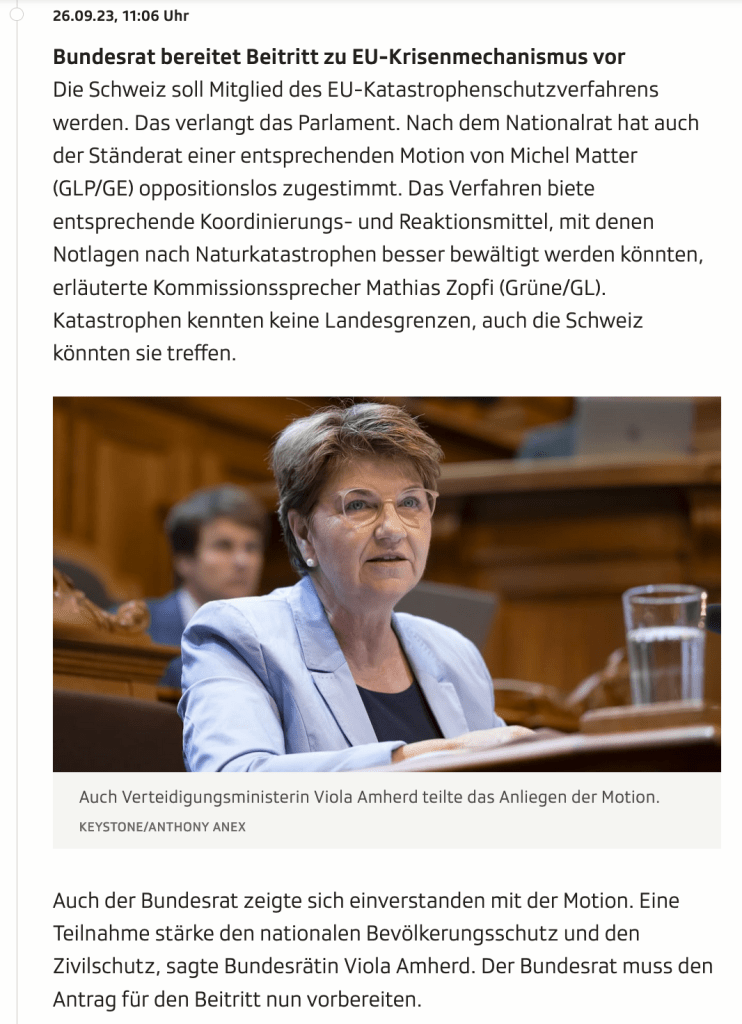
Furthermore, on 26 September 2023, the Federal Parliament announced that Switzerland is preparing to join the UCPM, after the motion was approved without opposition first in the Nationalrat (National Council) and then in the Ständerat (Council of States). This decision aligns with our 2021 recommendations, and the findings in our follow-on report in 2023 , which identified opportunities for Swiss Civil Protection through an analysis of structural and procedural changes in Germany, Austria, France, and Italy in response to recent climate-exacerbated disasters.
Building awareness and recognition of gender to improve wildfire management
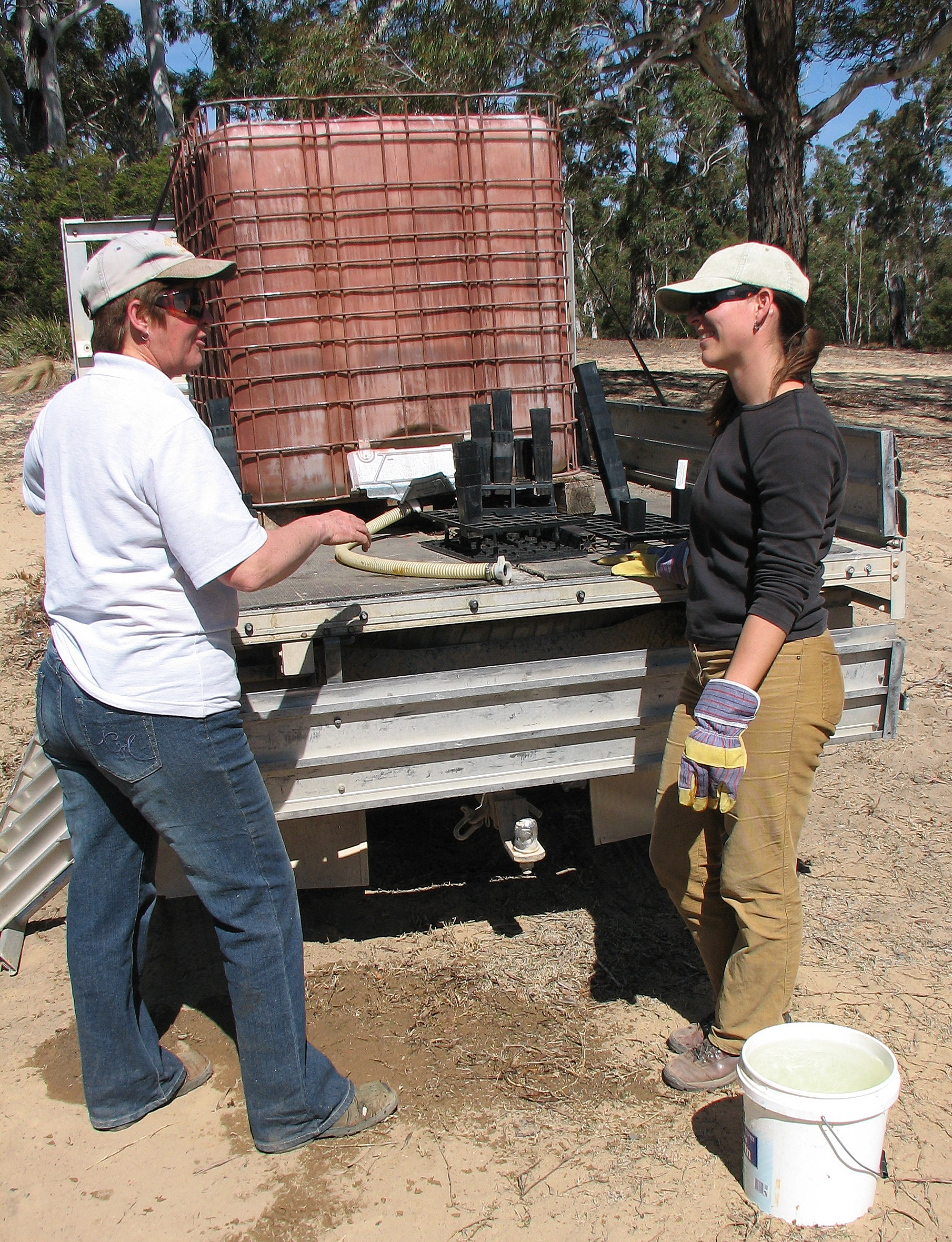
In 2007, I established a research program at the University of Wollongong that set out to examine social dimensions of wildfire preparedness in New South Wales, Australia. Since then the project has evolved into multiple partnerships across Australia and North America with whom I between 2008-2016 conducted interviews, focus groups, and surveys to directly engage with residents in at-risk areas, wildfire survivors, rural fire services, Indigenous fire stewards, wildland firefighters and emergency managers.
Broadly, the research established expert knowledge on how people engage with social and environmental uncertainty in everyday life by focusing on the trade-offs people make between risks and benefits at scales ranging from individuals and community networks to official management agencies.
Specifically, the research provided clear evidence of how a gender divide in activities at time of death during wildfires historically correlates with the plans of actions of men and women during wildfires today. Women often deprioritise wildfire preparation in the context of other pressing everyday issues, while societal pressure sees men perform protective roles that many have neither the knowledge nor ability to attempt to fulfil safely. The research also identified a firefighting-masculinity that trades on ageism, sexism and homophobia, and discounts the worth of women and other types of male firefighters on the fireline. This has significant consequences for operational procedures and workplace gender equality.


In 2017, the University of Wollongong evaluated the impact of my research program in the context of the United Nations Sustainable Development Goals. It found that:
(1) The research had generated more holistic ways to understand wildfire vulnerability and resilience, which accelerated and legitimised recognition of gender as a key issue affecting wildfire management and safety processes.
(2) The findings had informed organisational approaches to community engagement, workplace culture, and wildfire management policy and practice, nationally and internationally.
(3) The research had championed the benefits of gender awareness, equity and equality through a sustained, long-term research commitment that built trust and awareness.
(4) As a point of reference in public, policy and media discourses, the research has benefited emergency management and outreach organisations, firefighters, marginalised groups, and communities in fire-affected and at-risk areas.
For a full evaluation of the research program, its beneficiaries, including testimonials from stakeholders, please visit: https://research-impact.uow.edu.au/case-studies/building-awareness-and-recognition-of-gender-to-improve-bushfire-management/
 Dr. Christine Eriksen