FiRES PhD student Filippo Zeffiri’s research compares official wildfire risk management strategies and local fire practices through interviews with firefighters and extensive animal herders in mountainous regions of Europe. Filippo’s interest in this topic grew from his Masters research, which has just been published in the journal Fire Ecology.
Titled, “The macchia is a garden”: wildfires, pastoralism and landscape ideologies in the Aurunci Mountains, Italy”, the article focuses on one of Italy’s most wildfire-affected areas. Together with Dario Novellino, Filippo conducted a series of narrative interviews in 2022 with local stakeholders, including pastoralists, farmers, firefighters, forest rangers, and natural park personnel.
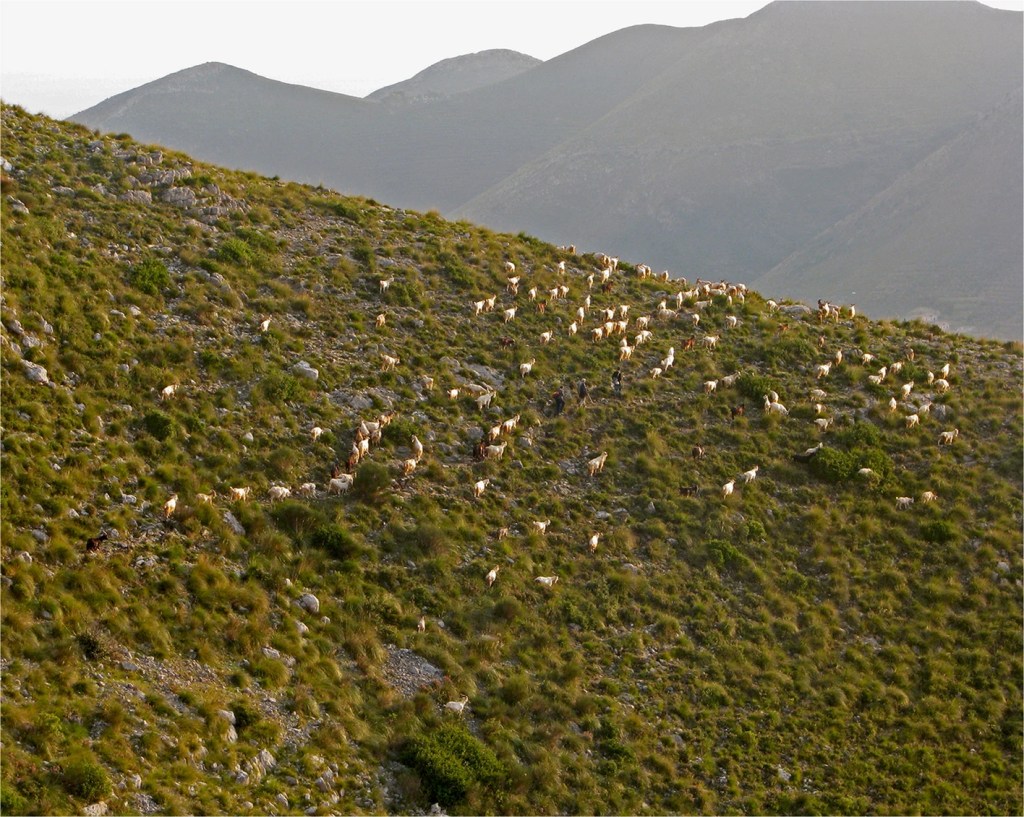
The interviews focused on land use change, change in space and landscape perception, and traditional fire practices. The research results highlight how different social actors present distinct landscape ideologies and perceptions of the environment, which inform their point of view regarding land use and fire management. On one hand, local pastoralists present a landscape ideology that emphasizes human intervention in the landscape, including the use of traditional fire practices for pasture renewal. On the other hand, representatives of local authorities took a hard stance on fire exclusion and minimal human intervention in the landscape. However, recent changes in local policies might indicate a shift in this attitude. Some participants also expressed a moderate, integrative viewpoint that shows some potential to bridge the cultural and ideological divergence between different groups. Many participants expressed a sense of grief related to the changing landscape and the disruption of the social-ecological system in the area.
Based on these findings, Filippo and Dario argue that mediation between stakeholders with different landscape ideologies is essential to improve wildfire resilience and fire management in the Aurunci Mountains. However, harmonizing these views is challenging due to conflicting perceptions of landscape and the relationships between people and the environment they live in. Thus, achieving consensus on wildfire prevention and management remains a significant challenge. As a first step towards a possible solution, they propose adopting participatory and transformative approaches in future research to promote a narrative of shared, desirable views of future fire management in the area.
Please join me in congratulating Filippo and Dario on the publication of a well-written article! The article is free to access online.
 Dr. Christine Eriksen