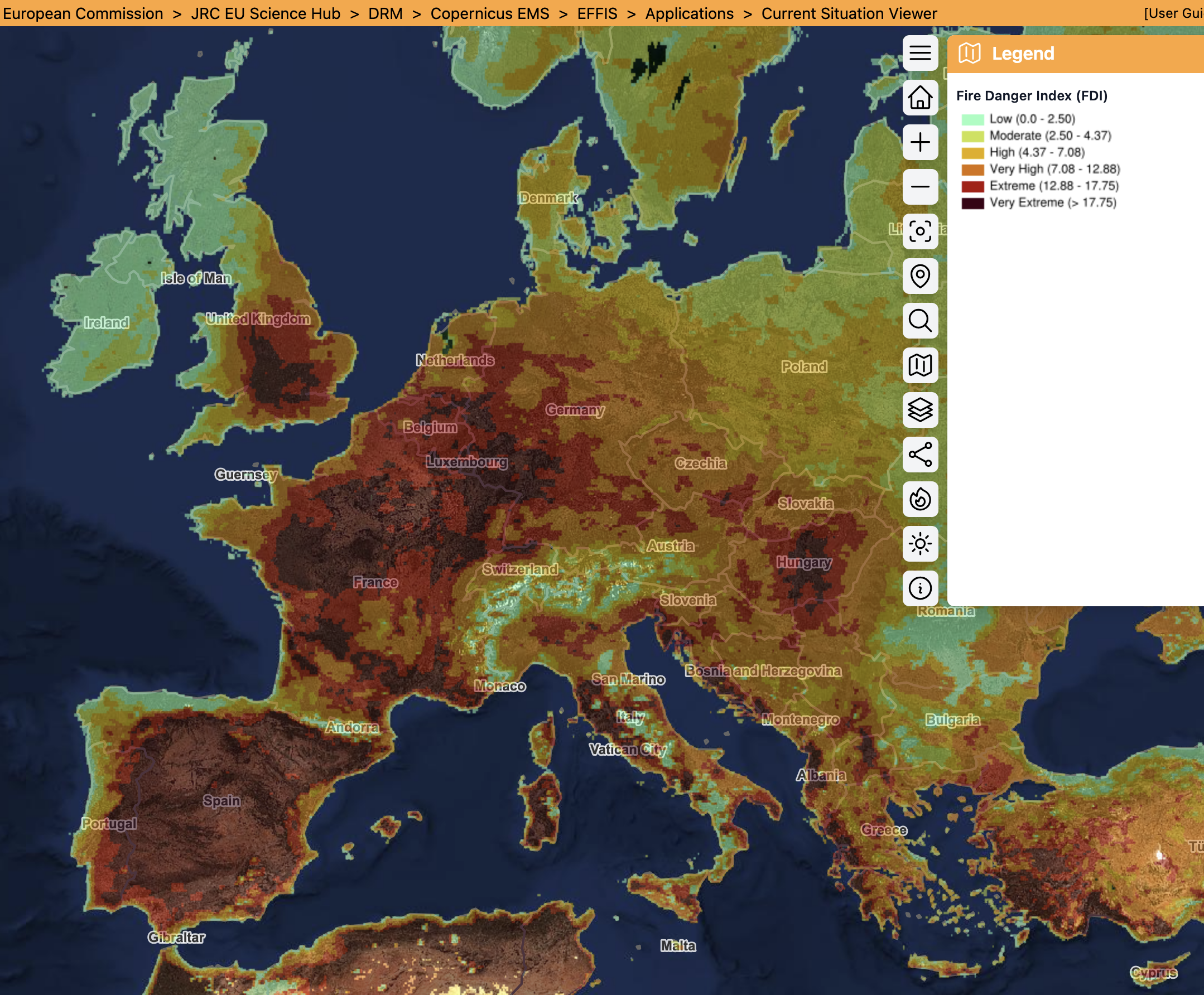
It has been a busy summer on many fronts, not least due to the wildfires that have dominated news headlines across Europe. I make a point of taking the time to speak with journalists. It makes a difference not just in terms of what aspects of a wildfire is covered, but also how it is reported on. As a mentor once instructed me: “Rubbish in, rubbish out!”. I.e., if you want the media to report on wildfires in an informed way, it is necessary to distill research into succinct and relatable insights. A particular focus of the media queries I received this summer was the future impact of wildfires in the Alps, as discussed in the following interviews:
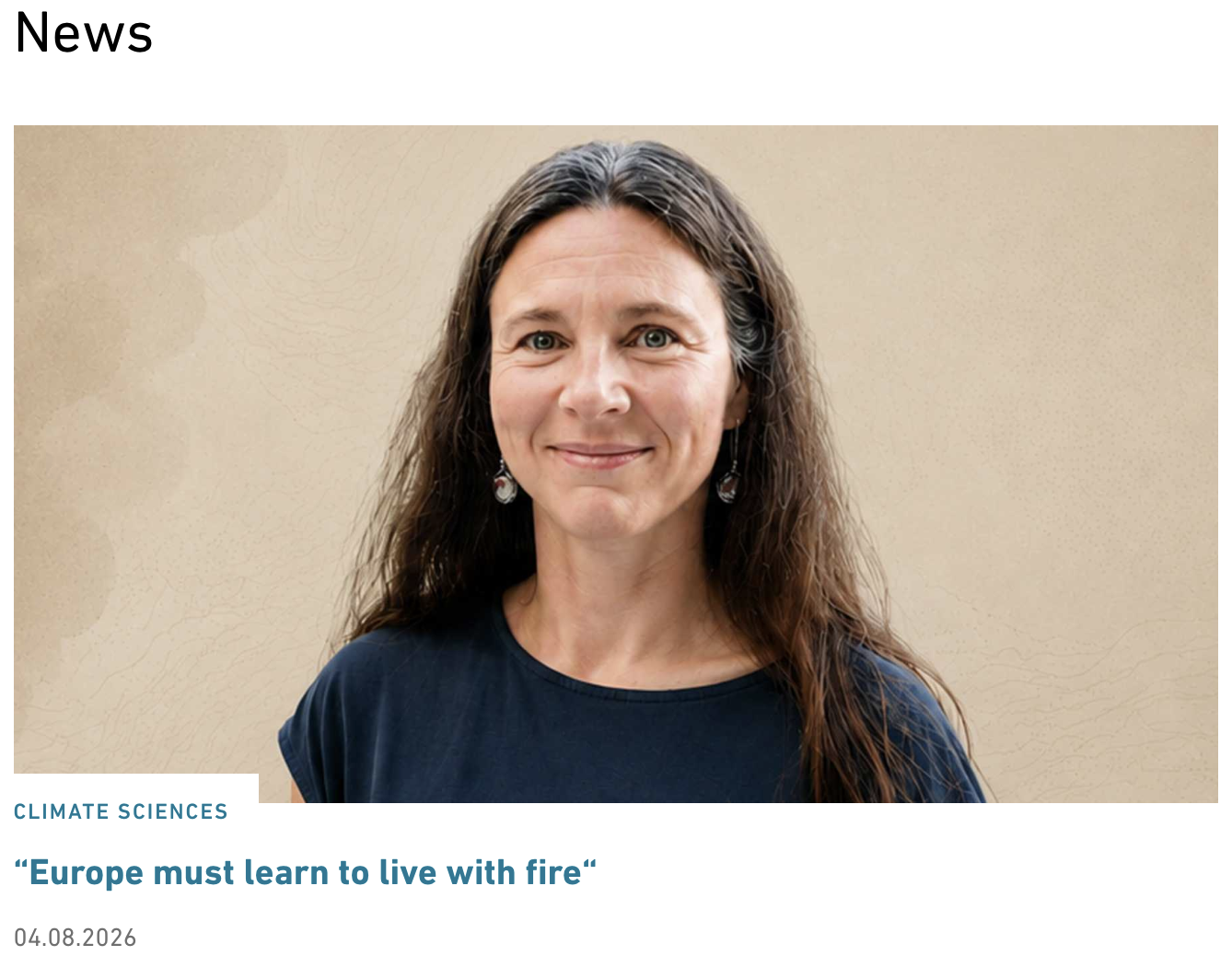
- ETH News, “Europe must learn to live with fire“ (D/E/F).
- Swissinfo, Europa brennt, die Schweiz hilft – doch beim EU-Katastrophenschutz steht sie vor der Tür (D/EN/F).
- Welt der Frauen, Ausgabe Feuer, Interview zum Thema Waldbrände mit Christine Eriksen (link coming soon).
The same rule of thumb I apply to engaging with journalist can also be applied to teaching. I was therefore happy to be invited to give two lectures on how to understand social vulnerability and enhance community resilience to wildfires as part of the 2026 Advanced course on Tackling wildfires in the Mediterranean: Towards an integrated fire management taught at CIHEAM Zaragoza in Spain in May.
A number of academic publications by the FiRES team and various collaborators also made it into press this summer – all of which are free to access online:
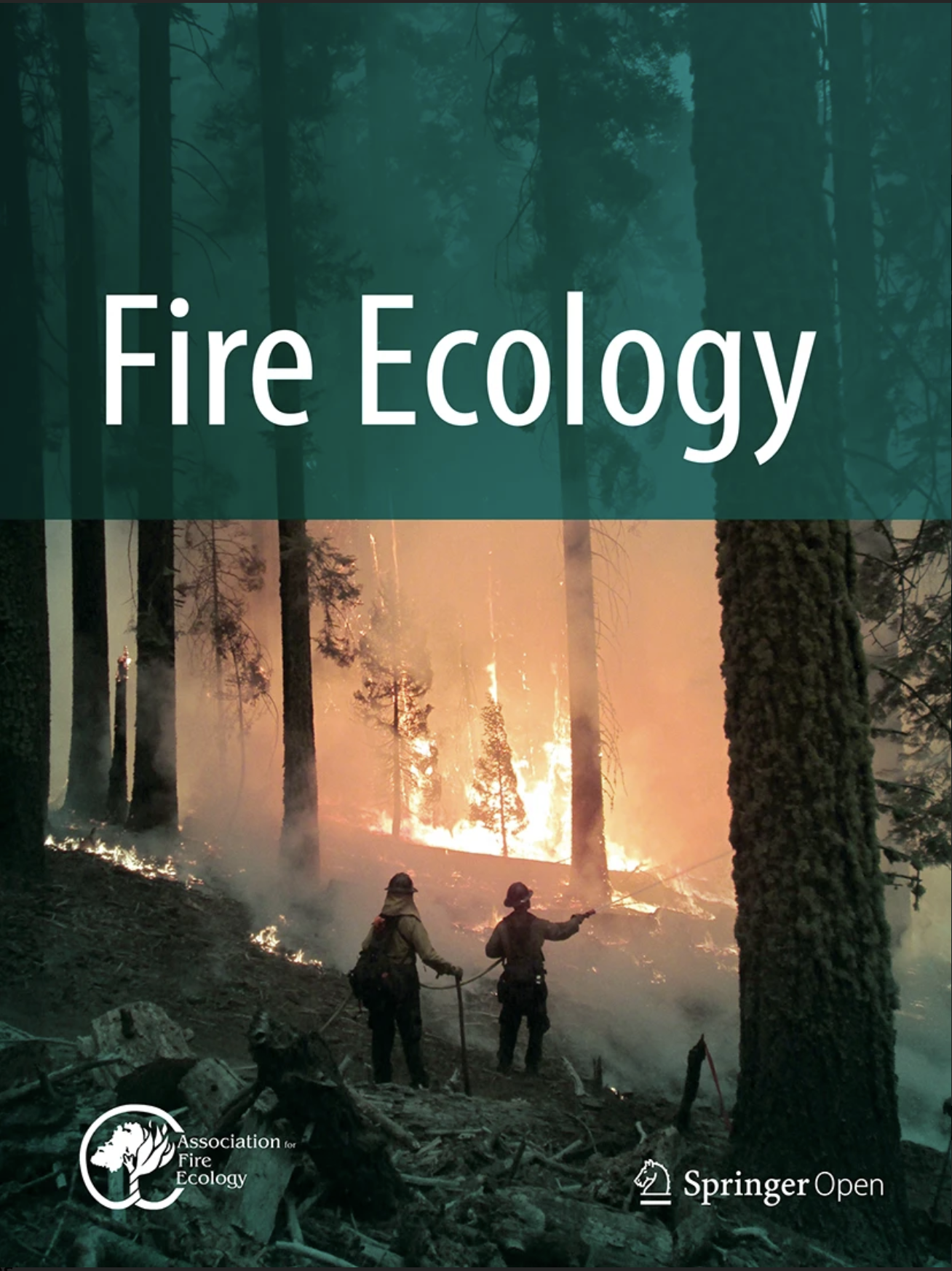
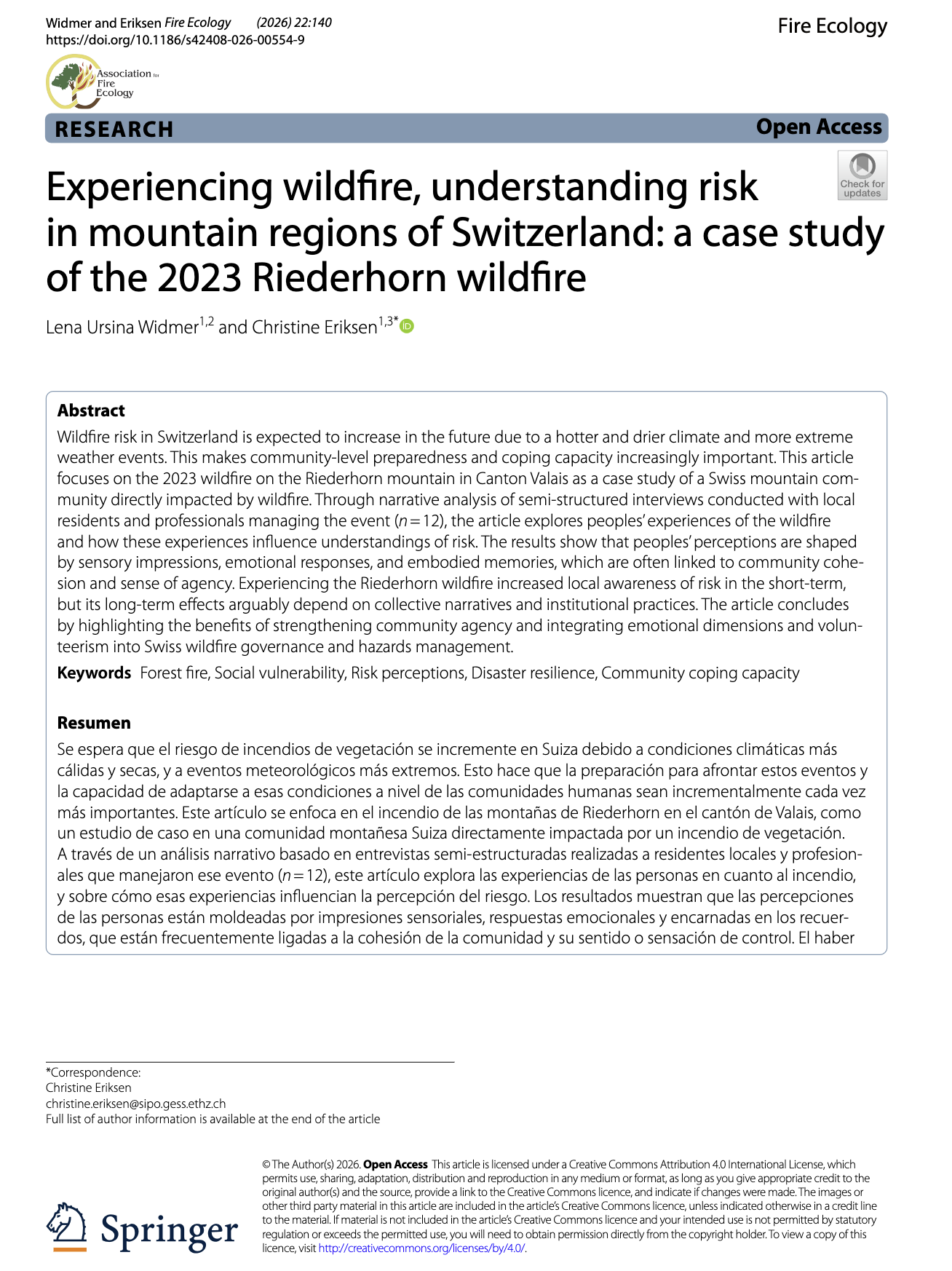
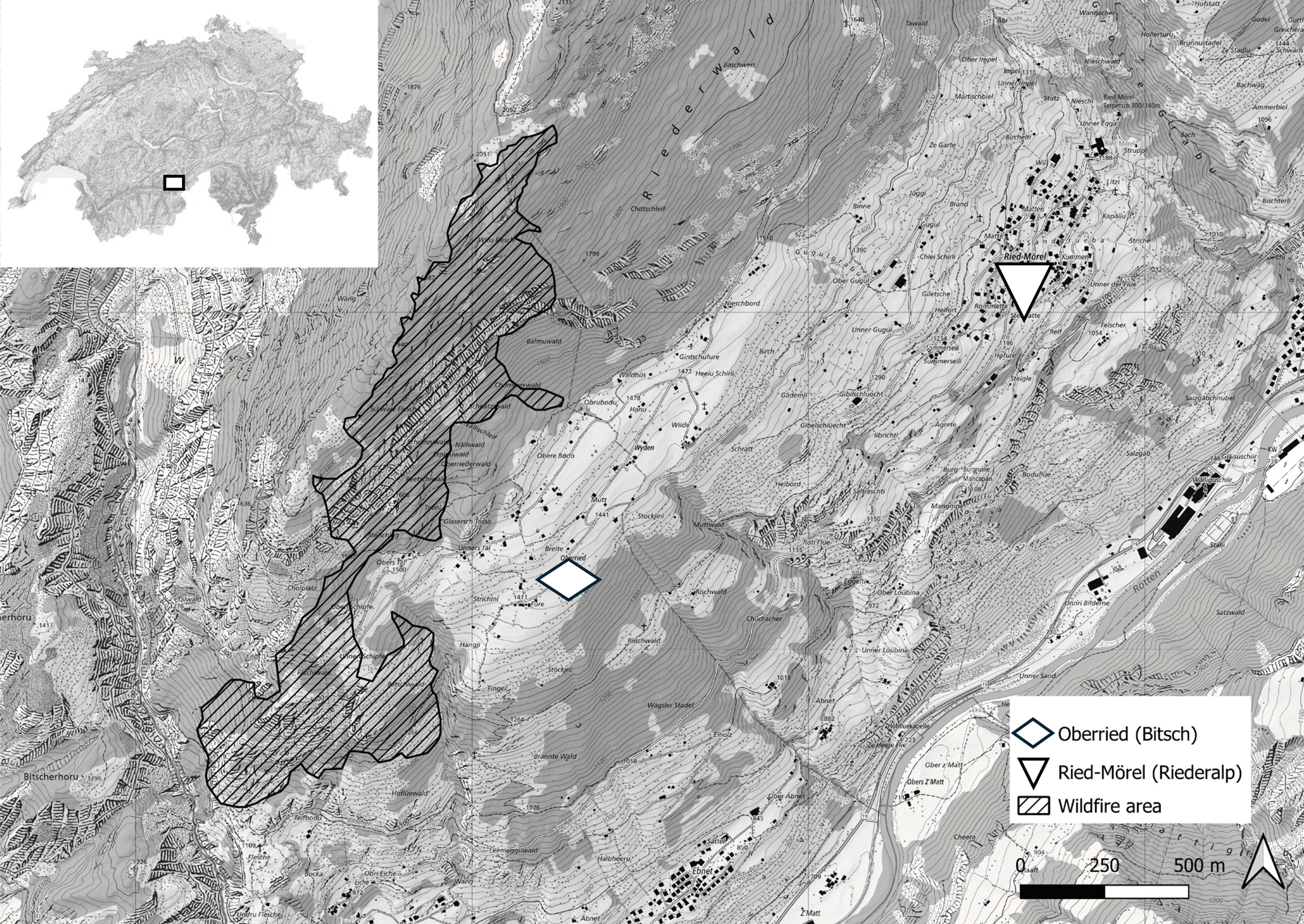
- Widmer, L. & Eriksen, C. (2026) Experiencing wildfire, understanding risk in mountain regions of Switzerland: a case study of the 2023 Riederhorn wildfire. Fire Ecology, 22(1), 140.
- Eriksen, C. (2026) Waldbrände werden auch von sozialen und kulturellen Prozessen geprägt (Kommentar). Schweizerische Zeitschrift für Forstwesen, Ausgabe 5/2026.
- Zeffiri, F., & Novellino, D. (2026). “The macchia is a garden”: wildfires, pastoralism, and landscape ideologies in the Aurunci Mountains, Italy. Fire Ecology, 22(1), 77.
- Komposch, N., Eriksen, C., & Fischer, M. (2026) Interdisciplinary Perspectives on Geoviolence: Towards Relational Conceptual Integration. Geo: Geography and Environment, 13(1): e70089.
- Reimer, R. D., Eriksen, C., & Warren, A. (2026) The Second Shift in Mountain Guiding and Avalanche Work: Intersectional risk, human-caused hazards, and risk-management effectiveness among non-dominant groups. International Journal of Disaster Risk Reduction, 139, 106144.
- Daly, M., Boehme, T., Turner, N., Aitken, J., Green, A., McKinnon, S., Eriksen, C., & Cooper, P. (2026) Strengthening Community Disaster Resilience in Uncertain Times: A multi-level analysis of an Australian bushfire. International Journal of Disaster Risk Reduction, 133, 106000.
The FiRES team also welcomed a new member this summer with Dr. Zali Fung relocating from Australia to join us as a postdoctoral researcher in early June. Trained as a human geographer and political ecologist, with a PhD from Melbourne University, Zali has carried out in-depth research into the (geo)politics and impacts of long-proposed hydropower dams in Southeast Asia’s transboundary river basins, and community and civil society responses and resistance to these projects. She has written a range of insightful articles on, for example, how social movements strategically use time to incrementally improve development outcomes under authoritarian conditions in the Thai-Myanmar borderlands. She is now using time as one of the analytical lenses through which to elicit insights from the surveys and interviews conducted as part of the FiRES project. We look forward to sharing these insights with you in due time.
 Dr. Christine Eriksen